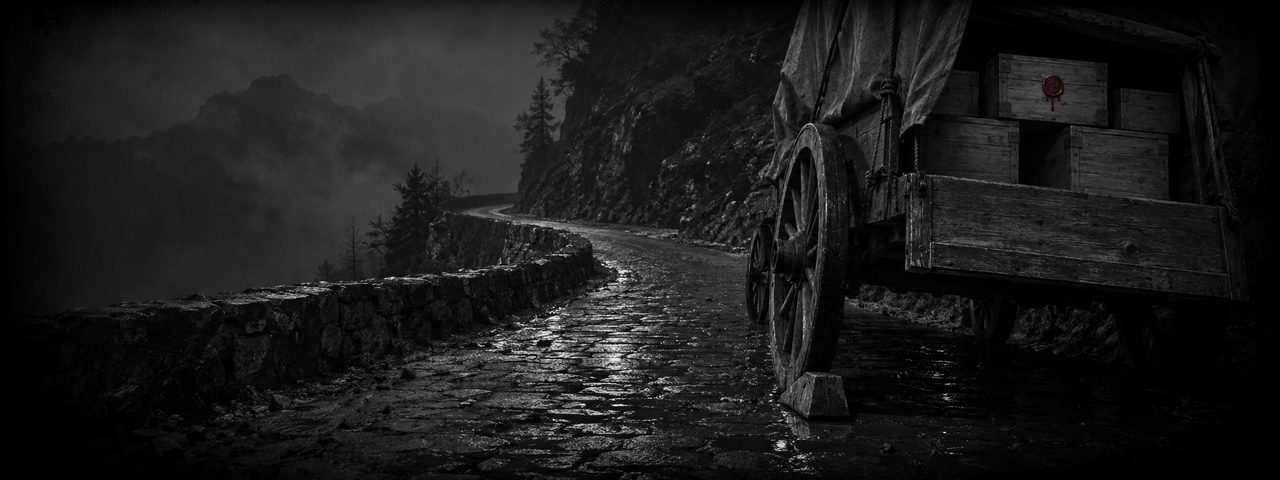
The Kantonal Confederation and the road — 1821 to 1830 — the Age of the Black Crusades
Historical context
1821. Six years after the Surrender of Vehr, the continent of Cross is living through the age that came to be called the Black Crusades — austere reconstruction under paranoia, with the trauma of the Age of Ash still lodged in the fathers and grandfathers of everybody living. Aurelianus I, the first One, has governed for eight years from Aurum Roma. He has declared seven internal States, fixed the frontier of the Limbus Mundi, instituted the Perpetual Vigil, and decreed in 1815 the refounding of the Clerical Military Orders — which exist, in that year, exclusively on paper: without budget, without recruitment and without written doctrine.
What exists in fact is a supply chain. The revelation of the Hashmal, opened in 1787, gave the world a family of minerals that work only after liturgical purification — and lay mining produces dead ore. Between the seam and the barrel of a gun there stands always a cleric, and it is to that hinge, and to no dogma, that the Curia owes the power it is going to have. But in 1821 nobody had put that into words aloud. Consecrated ammunition is bought and sold the way lead is bought and sold: by the crate, by the unit, with a receipt.
Moving through that market are the factors of the Kantonal Confederation — seventeen free cantons since the Federal Pact of 1817, with no army of their own, no colony, no revelation, and the only commercial fleet on the continent that is made of road and mule. They sell to everybody, by doctrine and by survival. A Kantonal crosses borders nobody else crosses, and the neutrality that protects him is also the thing for which nobody respects him.